Friday, July 17, 2009

PUBLIC ANNOUNCEMENT

Public Announcement
From the Maine Department of Environmental Protection­­­­­­­­­­­­­­­­­­­­­
17 State House Station, Augusta ME 04333-0017­
DEP Considers Using Herbicide to Control Eurasian Milfoil
in Salmon Lake
FOR IMMEDIATE RELEASE Contacts:
July 17, 2009 Paul Gregory 287-6961/557-2140
Donna Gormley 592-2032

(AUGUSTA)--The Maine Department of Environmental Protection (DEP) is looking at administering herbicide in a cove at Salmon Lake in Belgrade to control the spread of Eurasian Milfoil.

The DEP is holding a public meeting on July 22nd at 7pm at the Union Church in Belgrade Lakes to discuss the eradication efforts of the past year and reasons for taking this next step.

“The DEP divers meticulously went about the task of hand weeding the cove, and installed lake bottom barriers in an attempt to stop the spread of the invasive plant,” says Paul Gregory, an Environmental Specialist with the DEP. “The Eurasian milfoil is very aggressive and despite our efforts is rebounding such that the rest of Salmon Lake and downstream waters, namely Great Pond, now face an increased risk of infestation. “

The Eurasian milfoil in Salmon Lake was first reported to DEP last August by a summer visitor. Within a week DEP divers began removing plants and continued dives into late last September.

This year DEP conducted five dives which resulted in the removal of 325 plants – that’s more than twice what was found and removed last year. Other efforts to control the invasive plant include restricting access into the cove by boaters, extending Courtesy Boat Inspection hours at a nearby public boat ramp, and installing nets at the cove’s mouth and outlet to capture plant fragments in an effort to prevent them from spreading and taking root outside the cove.

“If Eurasian Milfoil is left unchecked it is capable of displacing native plants and altering the lake’s habitat,” says Gregory. “Given the situation, we feel appropriate use of herbicide will provide the most effective means available to prevent its spread and allow us better opportunity to control this infestation manually.”

The only other known Eurasian water milfoil infestation in Maine exists in a small private pond in Scarborough.

Thursday, June 11, 2009

time for a buffer zone??

BRCA Conservation Corps

The Corps's mission is to reduce sources of pollution in our lakes (Great, Long, Snow/Messalonskee, East, McGrath, North, Watson and Ward Ponds, and Salmon Lake). Founded in 1996 by BRCA, this self-sustaining summer program has completed more than 494 erosion-control projects on all seven Belgrade Lakes in the watershed. Each summer a project director oversees two full-time crews of high school students and crew leaders. Projects like Peninsula Park in Belgrade Lakes Village have helped the conservation raise local awareness of erosion issues.

The BRCA Conservation Corps is seeking candidate sites for its work on an ongoing basis. The Corps will do hand work such as planting trees/shrubs, stabilizing eroding shorelines (riprap), stone lining of eroding ditches and building waterbars and turnouts on roads and drainage ways. Labor will be provided free of charge; landowners will pay for materials and any permit fees. If you know of an eroding site that needs stabilizing, let us know. The Corps Director and the Watershed Program Coordinator are available for on-site consultations about how your property may be affecting water quality in our lakes. Call us at 207-495-6039 or fill out a site assessment form (PDF*).

Every spring the BRCA Conservation Corps seeks energetic, committed, responsible students to perform physically demanding outdoor work.

  • Positions are open to high school students age 16 or older, who are capable of performing physically demanding outdoor labor on a daily basis.
    Preference for applicants from Belgrade, Oakland, Rome, Sidney, or Smithfield.
  • 35 hours/week beginning in late June and running for seven weeks.
  • Must provide own transportation to job sites and be willing to carpool when possible to sites around all seven Belgrade Lakes.

Interested applicants should send a brief application letter consisting of their name, address, phone number, Social Security number, age, grade, names and contact information for three references, description of previous job experiences and/or school activities, and an explanation of why they are qualified for the job.

Send applications to:
BRCA Conservation Corps
P.O. Box 250
Belgrade Lakes, ME 04918

brcacc@gwi.net
(207) 495-6039

summer sunset

Summer on Messalonskee Lake by Baron Collins-Hill.

about the lake

Advertise On Lakelubbers

Messalonskee Lake, Maine

Also known as: Snow Pond, Nine Mile Pond


Locations


<<

Messalonskee Lake: Map & Description

Messalonskee Lake, also known as Snow Pond and Nine Mile Pond, is located in the Belgrade Lakes Region of Central Maine. The 3,510 acre lake, the second largest of the Belgrade Lakes, is approximately 9 miles long and is the result of continental collision and glacial scouring. Its size was increased after it was dammed in 1905 to provide waterpower to Oakland's Cascade Woolen Mill and several factories in the early 20th century. Its average depth is 33 feet with a maximum depth of 113 feet.

While power boating is permitted on Messalonskee Lake, the lake suffers from a problem with aquatic plant life (milfoil) and therefore has become a popular destination for paddle boating, canoeing, and kayaking. Because of its unique habitat and conditions, the lake is considered one of the better places to view plants and wild animals, and binoculars are a must for an afternoon boat ride. The flora and fauna are abundant, ranging from singing bullfrogs and proud bald eagles to carnivorous pitcher plants. Black terns, a rare sight in Maine, also nest on the lake and any visitor will be awed by their beauty.

Fishing is a popular activity on Messalonskee Lake. Anglers can wile away the hours fishing for American eel, crappie, trout, bullhead, pickerel, fallfish, shiner, salmon, bass, pike and more.

While popular for its fishing, the lake is also known for its birding and scenic landscape. Whether observing nature in a canoe or kayak from the water or taking advantage of hiking trails, you will be in awe of the quiet peacefulness of the area, giving you unique and wonderful opportunities to catch animals in their element: foraging for food, bounding through the trees and sleeping in knolls. Don't forget your camera!

Messalonskee Lake: Statistics

  • Lake Type: Natural Freshwater Lake, Dammed
  • Surface Area: 3,510 acres
  • Average Depth: 33 feet
  • Maximum Depth: 113 feet

Saturday, January 31, 2009

Ice Fishing Frensy

Ice Fishing Frenzy is 'still rock 'n' rolling'
B
)


OAKLAND -- It started as a small winter outing on one lake.

But that was 18 years ago.

Today the Children's Ice Fishing Frenzy is just that -- a frenzy. A good one, though.

As in about 200 children spread among seven lakes in the Belgrade chain, experiencing a sporting activity that is quintessentially Maine.

"This activity really fits the Belgrade Lakes," Oakland Recreation Director Eric Seekins said. "I'm not sure you could do it in Portland, but it works for the Oakland Recreation Department. Originally, it was born out of my own interest in the outdoors and now, 18 years later, it's still rock 'n' rolling."

By Friday afternoon, the deadline to sign up, Seekins had nearly 200 children registered for what this year will be a Super Bowl Sunday event.

For most of its history, the Ice Fishing Frenzy was held on Messalonskee Lake alone.

Seekins added six more Belgrade Lakes -- Salmon, McGrath, North, Great, East and Long -- when he realized that many families had lodges or ice shacks on one of those ponds.

By expanding the venue, many families can stay warm fishing on their home ice.

"It makes it easier for the families with young children," Seekins said.

Participants can start fishing any time they wish, but they have to bring their fish to Atwood Elementary School to be weighed between 3 and 5 p.m.

Prizes are awarded in the following fish categories: white perch, yellow perch, pickerel, smallmouth bass, largemouth bass, black crappie, brown trout, splake, brook trout and northern pike.

And then there are the prizes for pre-determined mystery weights, as well as prizes through special drawings and a special prize for the largest fish.

No child, moreover, leaves without receiving a certificate of participation.

"Everybody," Seekins said, "will walk out of there with something on Sunday. All they have to do is show up at the school."

Seekins will be among the participants or, rather, he will be on a lake watching his children, ages 7 and 4, try to hook a big one.

It's important, he said, to let your children learn what ice fishing is all about.

"If (ice fishing) is not passed on to the next generation," he said, "we are going to lose it, and this is a nice, friendly way do to it."

Friday, January 30, 2009

ice fishing in Maine

Tips For Ice Fishing in Maine

ice fishing in maine There is very little to debate when it comes to ice fishing; people either love it or hate it. But in states like Maine, there is a long tradition of ice fishing, and many people that ice fish can't wait for winter to come so they can get on the ice and enjoy this sport.
But if you’re new to ice fishing in Maine, it is important to get an understanding for what this sport is all about before charging out on the ice. This article will cover the basics of starting out in ice fishing. Who knows, you may even find out that you love the adventure of getting out and catching some big Maine fish.

The first rule of ice fishing is somewhat obvious, but it cannot be overstated enough. Always make certain that the ice your fishing on is safe. A good rule to follow is to wait until there is a minimum of 6 inches of ice on a lake or pond before attempting to fish on it. There are also different types of ice, and it would be wise to get familiar with all of them before heading out.

"Black ice," is a name given to ice that is mostly clear, and contains only air bubbles thoughout it. Black ice is considered to be more safe than the deceivingly-named, "white ice," which is not as clear, and contains melted snow that has been re-frozen over and over. In general, ice fishing beginners should stay away from white ice.

Another good rule is to always test the ice before setting up and fishing. You can often test the ice by the shore, you should drill a couple of holes in the ice close to the shore where the water is not as deep. This will help you to get a good idea of how much ice there is and the quality of it. Another good idea is to ask other fishermen about the quality of the ice and its thickness.

When choosing a spot to fish, you should look at getting some ice fishing access maps that can be available online for lakes and ponds in Maine. These will help to give you a better idea of the depth of a pond or lake that you intend to fish, and hep suggest locations to set up your base camp for fishing. It's also good to note that you need not go out into deep water to catch fish. Many experienced ice fishermen rarely risk going out beyond 6 or 7 feet deep. As a first timer, it is a good idea to stay closer to the shore anyways, and you can be confident that it is just as easy to catch some fish.

Another rule of ice fishing is to never go ice fishing on your own. You should always take a friend when you venture out to go ice fishing. This is important for safety reasons, and it can also make your entire experience much more enjoyable. Another good idea is to let your family or friends know where you will be fishing and at what time you plan to be done.

Ice fishing in Maine can be a great winter pastime, and a way to pass those long, dark winter evenings, but remember, when it comes to ice fishing, safety should always come first.

Friday, January 23, 2009

BOWDOINHAM, Maine - The morning is sunny; the river is frozen. Snowmobiles and four-wheelers whisk us over the smooth ice and snow a couple of cold miles to Jim McPherson's secluded shanty on the Cathance River, a tidal tributary of Merrymeeting Bay.


The shack looks like a kindergartener's drawing of a house. It is about 10 feet square with a front door, a peaked roof, a few windows, and a pipe chimney blowing wood smoke. McPherson, who lighted the stove, has already come and gone. Inside it is warm as a sauna.

Open the door and step up from the ice onto a plywood floor that stops short of the side walls to make room for rectangular holes that have been slashed out of the frozen river with a chainsaw. Above these gaps hang a dozen or so lines attached to a 2-inch-by-2-inch beam. Nudge the beam, and it jigs the hooks.

We bait the lines with pieces of sandworm and lower them into the river where they hang, weighted with lead sinkers, some closer to the surface, some closer to the bottom.

Maine's coastal rivers usually freeze just after Christmas. Sportsmen drag their handmade shanties onto the ice. The fish to catch are smelts - tiny, sharp-toothed, silver-sided relations to salmon and trout. Fresh out of the water they smell like cucumber. Breaded with cornmeal, fried in butter, dipped in tartar sauce, and eaten off the bone, they are a superlative snack - fish to gush over.

In the winter smelt come with the tides day and night. They summer along the coast in shallow water close to shore. In fall they move up into the estuaries and winter under the ice. In spring, when the ice melts, they wiggle up the brooks to spawn - but for now all is frozen and the fishermen are waiting, lines ready, tall tales in the air.

Around Bowdoinham there are a handful of smelt camps that can be booked by the tide - little smelt villages, where for less than $50 each group gets a shack complete with wood stove, fishing lines, folding chairs, and newspaper-wrapped packets of bait. Bring your own beer.

McPherson, 54, big and bearded, has made a living from the bay and its rivers all his life. He has fished for eels, hunted ducks, and rented houseboats. For about 20 years he has maintained Jim's Smelt Camps, a cluster of ice shacks just upriver from the little Brooklyn Bridge on Route 24 in Bowdoinham.

Until sometime in March McPherson and his crew will work the camps 24 hours a day, seven days a week. In and around a shack by the road they cut firewood, watch television, cook at the snack bar (griddled hamburgers and fried potatoes), smoke cigarettes, drink coffee, plow, pack bait, stoke the stoves.

Shack renters come at all hours: old men in the morning to fill five-gallon buckets with fish; college kids during the day to gawk, drink beer, and make cellphone videos to post on Facebook; rockers at night with giggly women and boom boxes.

McPherson also keeps an upriver camp at what is known as town farm turn. "I'm the smelt chaser," he says. "That means I go where the smelt are." The camp, "for serious fishermen only," is more secluded, more expensive, and offers better fishing. After some slow fishing in the cluster by the bridge we pony up for the champagne lounge - $25 a person instead of $15.

It's worth the extra dough. Our lines start twitching a minute after they hit the water. We bend down and tug the lines out of the water. Smelt! The fish are a few inches long - shiny and squirmy, bright eyed and iridescent. To honor local tradition we bite heads off the first fish and spit them out. The still wriggling bodies go into a bucket.

For nearly four hours the lines do not stop moving. The haul is mostly smelt, big females and small males, but toward the end of the tide we pull in some white perch as well. We work the lines like puppeteers, pull fish off hooks, throw fish in buckets, and empty full buckets into a giant trash bag on the snow outside.

We fry fish for lunch in a cast-iron pan on top of the woodstove. We drink beer. We eat chips. Thick steamy vapor comes up from the cold water. The floor is wet from flapping fish. We step outside the shack, wearing T-shirts, squinting in the glare of the sun, hearing nothing but the groaning of ice, seeing just crows, and trees, and ice.

About 2 p.m. the tide turns, and McPherson arrives to pick us up. We pull the lines, squeegee the floor, and shut down the stove. The trash bag is full of fish, probably 50 pounds of perfect little silver icicles. Again, we bomb over the frozen ice. The sky above is blue, the wind burns our faces and feels so good.

Later, we fry fish for supper.

Jonathan Levitt can be reached at www.jonathanlevitt.com.

Thursday, January 22, 2009

Be safe out there

Even in dead of winter, ice safety a must

Even though we're deep in the dead of winter these days, ice can still be tricky $ as a couple of visitors found out last weekend.

Dennis Belmonte, of Middleton, Mass., was riding with a group of three other snowmobilers on Sunday when his sled crashed through thin ice near North Twin Dam not far from Millinocket. It was the same area where a man from Connecticut was killed last spring when snowmobiling onto thin ice.

As a result, the Maine Warden Service for the second time this season is issuing a reminder to outdoorsmen to use extreme caution when going onto ice, "particularly in areas near bridges, thoroughfares, culverts and wherever else there may be currents flowing underneath as ice in these areas may be very thin or non existent."

All the proof you need in telling how serious thin ice can be is in a snowmobile sitting at the bottom of 30 feet of water.

"There are certain locations in the state that never freeze," said Major Gregory Sanborn of the Warden Service. "Locals usually know about these. Unfortunately visitors do not.

"Recreationalists not familiar with a particular body of water need to use extreme caution. Never follow a track just because it's there. Also, be aware of any moving water, such as inlets, outlets and culverts."

It takes colder temperatures to freeze water in culverts, inlets and outlets because it is in motion, Sanborn said.

"Areas of moving water never freeze to the point of being safe to cross or ride upon," Major Sanborn said.

Safe ice conditions cannot be assumed, even though most of Maine's lakes and ponds are currently frozen over. Recent snowfall covers the bodies of water, which both slows the freezing process and masquerades treacherous spots.

* * * * *

Tips for Ice Safety

* Never guess the thickness of the ice. Check it.

Check the ice in several different places using an auger or some other means to make a test hole and determine the thickness. Make several, beginning at the shore, and continuing as you go out.

* Check the ice with a partner.
If something does happen, someone is there to help you. If you are doing it alone, wear a lifejacket.

* If ice at the shoreline is cracked or squishy, stay off.

Watch out for thin, clear or honeycombed ice. Dark snow and dark ice are other signs of weak spots.

* Avoid areas with currents, around bridges and pressure ridges.

Wind and currents can break ice.

* Parents should alert children of unsafe ice in their area, and make sure that they stay off the ice.

If they insist on using their new skates, suggest an indoor skating rink.

* If you break through the ice, remember the following: don't panic, don't try to climb out immediately, reach for solid ice, lay both arms on the unbroken ice and kick hard to lift your body onto the ice. Once on the ice, roll to safety.

by Travis Barrett

loons make comeback

January 20, 2009
Loon population rebounds nicely

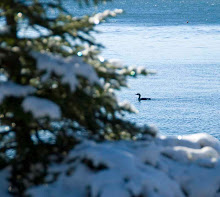
Good news from the dead of winter: Maine's loon population is on the rise.

According to a press release from Maine Audubon, after two years of declining numbers, the 2008 state loon count showed that loons are rebounding across Maine.

Over a thousand citizen-scientist volunteers helped conduct the 25th anniversary of the Maine Loon Count last July. Surveying 332 lakes and ponds across Maine one morning, the group recorded more than 2,000 loons.

There were 2,083 adults and 184 chicks in all.

"We were worried that there would be a drop in the adult population for an unprecedented third year in a row," said Susan Gallo, Maine Audubon wildlife biologist and director of the Maine Loon Project. "The bounce back is a relief and puts the population back on a healthy track."

The estimate of southern Maine's chick population for 2008 was 265, a drop from 2007's nearly record high of 422. Swings in the chick population are typical from year to year, but the population has remained stable over time.

While weather conditions stayed mostly favorable for loons leading up to 2008's count day, consistent rains in the weeks after may have had a negative impact on survival rates. With enough heavy rain, lake levels can rise enough to flood nests on the shore.

The 2009 count is scheduled for July 18.

"The record number of volunteers participating last summer was a pleasant surprise," said Gallo. "People's enthusiasm about the loon count no matter how old they are is always amazing

Friday, October 31, 2008

great lake save

OAKLAND -- Mike Guarino called it a one in a million chance that a pontoon boat set adrift from its moorings on Messalonskee Lake by 50 mph gusts would be recovered undamaged.

But that's what happened Wednesday morning.

Guarino, a neighbor to the family that owns the pontoon boat, said the incident is a testament to the power of the wind, which managed to blow the vessel off the ledge it was moored on for what turned out to be about a 4-mile trip on Messalonskee Lake.

"It never came unattached to its mooring weights," he said of the two 250 pound weights. "So what happened is those moorings continued to bounce as the boat bounced."

Guarino said boats usually end up crashing ashore when they go adrift.

But the pontoon boat, he said, somehow managed to steer clear of obstacles until the mooring got caught in a sandbar.

That's when Messalonskee Lake resident Edward Pearl spotted the vessel with fishing rods hanging from its sides.

"All I could think of at first," Pearl said, "is it is kind of cold to be fishing."

When Pearl saw no signs of activity onboard, he became concerned that somebody might have fallen overboard or suffered a heart attack or stroke.

A call to Oakland police, however, brought relief from that fear.

The pontoon boat owners had called police early that morning to report that the boat had drifted off.

Guarino used his fishing boat to ferry his neighbors to their pontoon boat.

He said they were able to start the vessel and motor home without a problem.

Guarino said he was relieved that nobody had tried to recover the boat via canoe or by trying to swim from the lakefront.

"That's how accidents happen this time of year," he said, noting that the water temperature has dipped to about 50 degrees

Mike is the lake assoc.board of directors newest member.


Mike owns and operates Maine wilderness tours in Belgrade Maine


contact him at ... info@mainewildernesstours.com

or 207-465-4333

Great work mike

Sunday, September 14, 2008

interesting pontoon design


this is wrong on so many levels
good to see the has provided for the inevitable with
a life ring on the upper deck

Monday, August 18, 2008

BRCA Aquafest

We’re Throwing a Party, and YOU’RE Invited!

The big Do is AQUAFEST, a family festival celebrating the seven beautiful Belgrade Lakes on August 29 and 30, 2008. Consider yourself cordially asked to round up the gang and join your neighbors for summer’s fun finale on Labor Day weekend.

AQUAFEST offers something for all ages … a timed 5K Race for the Lakes, a Kids Corner Challenge (ages 1 to 12), a Fun Run, Walk, Crawl or Creep (in which dogs with securely leashed owners may compete), Kayak Races, GPS and kayak lessons, music, art, a Farmer’s Market, a yummy Family Barbecue, an Art Mart, and much, much, more!

Festivities kick off with a cocktail party from 5 to 7 pm on Friday evening at the Village Inn in Belgrade Lakes. You’ll be off to the races at 8 am the following morning when the 5K sprints out and back from Camp Runoia on Point Road in Belgrade. Then the Kids Corner Challenge with T-shirt painting, games, prizes and a Lake Event Course runs from 9 to 11 at the Belgrade Center for All Seasons, with the Fun Run following-on close behind. Awards for all events and the Fishing Derby winner take place before the noontime Chicken Barbecue in the Rec Center picnic grove; then Canoes and Kayaks Race off from the waterfront at 2 pm.

If that isn’t enough to occupy family and friends, your gang can take boat and float plane rides, visit the Farmers’ Market, snag a Labor Day bargain, find a summer keepsake at village stores or the Art Mart, or munch on AQUAFEST Specials at village food emporia.

There’s more to tell, but we’ve run out of room. No problem! All details can be found in the AQUAFEST flyer (at random watershed locations) and on the BRCA website www.belgradelakes.org

Thursday, August 14, 2008

Days'Store turns 50

Days Store, Belgrade Lakes Icon, Celebrates 50 Years

July 16, 2008 - BELGRADE LAKES -- Summer in Maine, particularly in the Belgrade Lakes region, is for vacationers. A time to travel through a mosquito-studded wonderland of nostalgia, back to the days of one's youth where eternal summers were spent with a parent in a canoe, or on rainy days, crowded around a Coleman stove, popping corn.

Driving through Belgrade Lakes, many visitors will pull their cars off Route 27 and into the packed parking lot of Days General Store, which is celebrating its 50th anniversary.

Drawn in by its neon sign surrounded by a wreath of golden stars and a big paper "50," this writer entered the general store to the familiar faces of former high-school classmates, bustling around the counter, pulling fresh pizzas from the ovens, and dealing with customers.

The store sells bait and tackle, sandwiches and baked goods, homemade fudge. You can pick up libations, newspapers, clothing, fishing gear and a fishing license, and use its ATM machine.

Three of the girls working there represent the fourth generation of the family-owned and-operated general store, established by the grandparents of the current owner.

"We draw from all over New England," said store owner Diane Oliver.

"Just this week we had some folks from England and Germany."

Despite its reputation as one-stop general store among the Belgrade Lakes holidaymakers, from near and away, the store maintains its true small-town feel, providing a refuge for a host of regulars.

"The family keeps the store running all winter," said Oliver, providing year-round service to other local families who have been coming here for generations, and not particularly catering to vacationers. When you're here, you're just one of the family."

This philosophy can most likely trace its origins to Jim and Mae Day, the couple who established the store with the intent of creating a family business in 1958.

It's uncertain if they envisioned their great grandchildren tending the till, but they would no doubt swell with pride at the golden stars ringing the window of the store they created all those years ago.

BY JOHN AYOTTE, Kennebec Journal,

D E P codes violation in new Sharon

Town of New Sharon Takes Land Owners to Court

August 06, 2008 - NEW SHARON -- A couple from Massachusetts who own property on a rural road in New Sharon violated environmental laws when they bulldozed a stream bed, built barrier dams and constructed a road near the water without a permit, town officials say.

Violations against Melissa and Richard Deleskey, who own property at 255 Swan Road in New Sharon and also in Salem, Mass., date to the summer of 2006.

A phone call this week to Melissa Deleskey was not returned.

In 2006, an inspector from the Maine Department of Environmental Protection determined approximately 150 feet of Kinney Brook had been cleared and an area within 75 feet of the stream had been graded. Also, heavy equipment was used to build a road near the water, according to a complaint filed by the town of New Sharon in Farmington District Court.

"The Deleskeys implemented no erosion controls and no permit or approval was obtained by them from the town," said New Sharon's municipal attorney, Frank Underkuffler.

Underkuffler said he has been in contact with the family and is drafting a consent agreement that includes a fine and also an order for a professionally-prepared restoration plan showing how the disturbed shoreland will be returned to its previous condition.

The agreement will be negotiated with the Deleskeys and selectmen will vote on it later this month.

He anticipates the Deleskeys will make a good faith effort to comply with the town's shoreland zoning ordinance.

"A lot of people are unaware that they cannot alter a brook or stream," Underkuffler said.

A town's shoreland zoning ordinance regulates the removal or clearing of vegetation along a waterway and also filling or earth-moving within a Stream Protection District. The state's Natural Resource Protection Act, overseen by the DEP, covers dredging, bulldozing, removing or displacing soil, sand, vegetation or other material in and adjacent to a river, stream or brook.

According to the New Sharon complaint, the Deleskeys were ordered to pay a $1,000 fine and $400 to cover the cost of attorney's fees and enforcement. They were also ordered to install adequate erosion controls including a silt fence, to mulch all exposed soil, and submit a restoration plan.

The plan was to be reviewed and approved by Code Enforcement Officer James Fleming and the Planning Board.

"The Deleskeys failed to take any of the ordered actions," the suit states.

Minimal remedial actions taken by the Deleskeys "have not abated the environmental problems caused by (their) shoreland zoning violations," according to the complaint.

New violations this year include barrier dams in the streambed that pooled and slowed the flow of water. The complaint also states that a woods road adjacent to the stream had material removed.

In 2006, DEP issued a notice of violation to the Deleskeys for the stream and shoreland disturbances.

After lengthy negotiations, the Deleskeys signed a consent agreement and paid a $3,000 fine, according to DEP spokesman Scott Cowger.

A restoration plan was submitted to the DEP that included replanting of trees and some work was done. However, many of the trees have since died, he said.

New violations found during a DEP compliance inspection in May included the small rock dams. A second Notice of Violation was issued to the Deleskeys on June 9.

The agency is pursuing a second consent agreement that could have more stringent penalties including submission of a professionally-prepared restoration plan and additional fines.

"Consent agreements have to go before the Board of Environmental Protection to be approved. Clearly, having a second (Notice of Violation) may impact the board's decision," Cowger said.

BY BETTY JESPERSEN
Staff Writer Kennebec Journal Friday, August 01, 2008

Jet Skis, opinions


Maine Lakefront Real Estate - Jetskis, the New Controversy

When it comes to Jetskis, or “personal watercraft ” as the manufacturers like to call them, ninety percent of lakefront homeowner opinions I’ve heard fall into two extreme positions.

Extreme Position #1: OUTLAW THEM COMPLETELY – Many believe that unlike powerboats, which are designed to take one from point A to point B, jetskis are not designed for that peaceful and benign purpose. Folks seeking thrills, excitement and a rather noisy kind of fun are drawn to jetskis like moths to a flame. To some, jetskis are to boats as “funny car” hot rods are to automobiles. A virulent strain.Most jetski owners are not oblivious to the fact that many people hate jetskis. Strangely, this does not deter them from buying jetskis. In gentler times, irritating the neighbors would be considered bad form, or at least unneighborly. Not any more. They seem to feel that “the right to own jetskis should not be infringed upon”. Their sentiment seems to be that folks who come from hundreds of miles away to enjoy the peace and tranquilty of the lake or pond are, well, just going to have to put up with us jetski owners.

Many in the “peace and quiet” crowd who yearn to commune with nature from their kayaks and canoes, generally favor the outlawing of jetskis, especially on smaller lakes and ponds.

Extreme Position #2: NO RESTRICTIONS ON JETSKIS ON ANY LAKE OR POND AT ANY TIME - Folks who hate the government interfering with our personal liberties decry the oncoming “nanny state”. “Where in the constitiution does it say that the government can abridge or eliminate the right to use one’s jetski whenever and wherever one wants?” is the hue and cry.Although only a tiny percntage of Maines lakes and ponds have prohibited jetski use, a fight is brewing. It was reported this week that a jetski owner is questioning the legality of the state to allow lakefront homeowners to prohibit jetskis on their lake (SEE FULL STORY). This jetski owner may be kicking a sleeping dog that just might bite him. Ever since the horrendous power boat accident on Long Lake attitudes are hardening.

The “Silent Majority” position - Allow jetski use on most lakes and ponds excepting the very smallest in size. Those jetskiers who become a problem or a nuisance would lose their right to operate a jetski on the lake. This position, however reasonable, is an enforcement nightmare for the harbormaster, the warden service and the local authorities. But the irresponsible and careless actions of a few should not bar the responsible use and enjoyment of jetskis by many lovers of Maine lakes and ponds.

Tuesday, August 12, 2008

MILFOIL ..again

Milfoil has been a repeating topic on this blog
the new infestation at Salmon lake has all in the Belgrade Lakes area
a little jumpy.Maybe this link will help explain the area's obsession
with the evil weed....


this from the BRCA

You all know about the situation at Salmon Lake and there is going to be news and updates coming out daily. DEP just installed marker buoys and are not allowing any boaters to enter the cover, unless they are land owners. You as a CBI need to tell all boater about this. If a boat is approaching the cove, you need to intercept and relay the message and express the importance of the situation. Below is a link that I urge you all to check out. We are also putting together volunteer monitoring programs and if any of you are able to help out, that would be great. Please let me know asap if you can help out next Tuesday the 19th or any other time.

Please make sure you all are telling boaters at all launches that it is the BOATERS responsibility to be checking their boats. The boaters should not be relying on the CBIs to check boats. They should have the personal interest to self check before and after they launch. Its getting towards the end of the season and boaters are getting comfortable and not as aware as they might have been at the beginning of the season. Invasive plants don’t take a day off so neither should the boaters.

Thanks to you all and let me know if you got any questions.

MAINE LAKES NEWSLETTER

http://www.mainelakes.org/documents/milfoil%20newsletter%20august%2008.pdf

Snow Pond/Messalonskee lake History

Ask most Americans if they have ever heard of Belgrade, and you will probably be told that Belgrade is the capital of Serbia, or the capital of the former Yugoslavia. Not many will be aware of Belgrade, Maine. The two Belgrades are, however, related to the extent that the town in Maine was named after the city in Europe. (According to the National Geographic Atlas of the World, Revised Sixth Edition, dated 1992, there are only five "Belgrades" in the entire world. Other than the ones in Serbia and Maine, they are in located in Minnesota, Montana and Nebraska. Oddly, all of the American Belgrades are in northern states.)

The relationship between Serbian Belgrade and the one in Maine came about because of the European travels of a John V. Davis, during the late 1700's. While in Europe, he had either visited Belgrade, or (more likely) had simply heard of the return of Christianity to the city, in 1774, after an absence of several hundred years, under Moslem rule. This was considered a great event in Europe, since it marked the first weakening of Turkish domination of eastern Europe.

However it happened, when the petition to create the new town in Maine was drawn up, it was Davis (a resident) who suggested it be named "Belgrade". Undoubtedly, also, the Austrian capture of the European city from the Turks (in 1789) was still very strong in his mind.

Coincidentally, 1774 marked the beginning of the known history of Belgrade, Maine. In that year a man named Philip Snow, who had hunted for some time I what is now Sidney, decided to look for new hunting grounds on the other side of the large lake to the west. He crossed the lade and landed about two miles north of what is now Belgrade Depot, and there he built a log cabin. He apparently intended this as just a base for his hunting trips, since he came alone, without any family. After about six years, Snow sold his cabin to Joseph Greely, and probably returned to his family, in Sidney. At some later date, but before Belgrade became a town, he returned to the west side of the lake with his wife and nine children. Later still, he and his family left the country. Snow Pond (now Lake Messalonskee) and Mt. Philip (just north of Belgrade Lakes) were both named in his honor.

Later in 1774, a few months after Snow had crossed the lake, two other settlers crossed to the west side of the lake to take up permanent residence. The first was Simeon Wyman, who arrived with his wife, Thankful, and six children. He settled on the southern slope of Belgrade Hill. His became the first farm to be cleared in the new area. Later, the Wyman's had a son, who was also named Simeon. He was the first white child to be born on the west side of the lake.

The second new arrival was twenty-four year old Joel Richardson. He was not married, and settled on the north slope of Belgrade Hill. Two years later, he married a Wyman daughter, named Sarah.

Another early arrival was Paul Yeaton. He was a Revolutionary War veteran, introducing a surname to the area which still survives. As the years passed, more settlers followed their lead. By 1790, the area had a population of 159 people. (While quite a few of the family names of these early settlers still exist in Belgrade, it is surprising how many have disappeared.) Six years after that first count, the population grew to about two hundred and fifty. At that time, this was considered to be a fairly large town.

An odd thing about all of this is that Belgrade history is very silent about contacts with the native Indian population. These Indians were the Abenakis. They were originally friendly towards the white settlers, but then the settlers apparently started to pillage and kidnap the natives and they became very distrustful. (One can understand why the history is so silent.) One exception to this is discussed later, with reference to the history of the Belgrade Town House. Today, there are no known records of any Indian legends or any interface with Indians, with that single exception.

Belgrade land titles originated with Charter Grants from English kings. Originally, Maine was simply a part of the Colony of New Plymouth. Then, in June1753, a group of Boston businessmen were incorporated as "the Proprietors of the Kennebec Purchase from the late Colony of New Plymouth". Although they were most active along the lower Kennebec River, some owned land in the Belgrade area. James Bowdoin, Treasurer of the "Proprietors" until 1790, owned lots here. Several current deeds trace back to his widow, Sarah, and other family members. This area later became known as the Washington Plantation of Lincoln County, and still a part of Massachusetts.

The residents of the area decided to petition the General Court of Massachusetts, asking that the town be separated from the Washington Plantation, and incorporated as the Town of Belgrade. The petition was received with favor and the incorporation papers were signed February 3, 1796, by Samuel Adams, then Governor of Massachusetts. Unfortunately, this very important historical document disappeared during a fire on February 4, 1943. It had been kept, along with other Town papers, in a concrete vault in the basement of the Central School. On that date, the school burned to the ground from unknown causes. It is thought that the document survived, possibly surfacing in the mid-1970's. It has not been seen since.

By this act of incorporation, however, Belgrade became the one hundred second Incorporated Town in Maine, and the thirteenth, in what is known today as Kennebec County.

Later, but still in 1796, a small part of Sidney was annexed to Belgrade, by consent of the General Court. This land lies between Belgrade Hill and Oakland, on the west side of Lake Messalonskee. Originally, Belgrade voters had agreed to accept the property, but then changed their minds in a second vote. The General Court, however, decided to go ahead with the original decision, against the new wishes of the citizens of Belgrade.

During those early years, a second acquisition of territory was made by Belgrade, and again, it was against the wishes of the citizens, who thought it would stretch the town out too far. This actually was a pretty good reason, considering the difficulty in travelling any distance, at that time. The residents of the Town of Dearborn, incorporated in 1812, and known until then as West Pond Plantation, didn't do well either in business or in farming, probably because the area was remote and the land was very rocky, and poor for farming. They petitioned the Maine Legislature to be divided and annexed to neighboring towns. An act was passed, in 1839, dividing Dearborn among the towns of Belgrade, Waterville and Smithfield. The land added to Belgrade was that lying to the north of the North Belgrade Stream, up to the present Smithfield border. It constitutes about one fifth of the area of Belgrade, and made the size of Belgrade what it is today. The act also added about three hundred people to Belgrade's population.

About two years later, the residents of a large part of Rome also petitioned the Maine Legislature to become part of Belgrade. This petition, however, was turned down.

The first Belgrade Town Meeting was held on March 8, 1796. During the rest of 1796, four more Town Meetings were needed to get the new town properly started. These Meetings were held in private dwellings or taverns, as space allowed, since Belgrade did not have a town hall. Finally, in 1815,two hundred dollars were set aside to build a "Town House". Construction was started, but it was not completed until 1834. Town Meetings were held there from that time until 1872.

In that year, the Town House was used to house a patient who had smallpox, no other facility being available. (The patient was the sole Indian mentioned in Belgrade history.) After that, it was decided to move the Town Meetings to a different location. They were then held in the Masonic Hall (later the Grange Hall, but now privately owned) until 1962. That year, the Meetings were moved to the James C. Hewitt Gymnasium of Central School. The meetings are held there to this day.

The old Town House still stands and is still in use, although it has seen many changes over the years. It is now used by the Cemetery Sexton as an office, as well as for equipment storage. The original entrance was at the east end of the building. Ten, in 1905, the town voted one hundred dollars to divide the House in half. The western half was designated a waiting room for cemetery visitors waiting for rides home. It is now the office. The eastern half is the present storage area. A small portico on the south side was added in 1938. The Town House is located on Route 135, just to the east of its' intersection with Route 27.

An example of what went on at the Town Meeting is what took place at the Meeting of March 1, 1876. The voters approved raising $3,000 "for the support of roads and bridges, allowing one shilling per hour on the highway, the difference between Horses and Oxen to be left to the Highway Surveyors". The same Meeting also raised $1,600 for the support of schools and $6,000 for support of the poor, as well as to defray all other necessary Town charges.

In addition, the voters approved selling "lots in the Graveyard to persons living out of Town and State" and voted the "the Selectmen reduce the valuation of Real Estate in the town on an average". (The sale of Graveyard lots, which was approved at the 1876 Meeting, was reversed in the mid-1900's.) The town clerk and constable at this meeting was a James C. Mosher. One can imagine the discussions that took place before each vote was taken. The length of the Meeting was not recorded.

Originally, Belgrade did not have a Town Office. The "office", in the early years, was simply a trunk containing town records. The trunk was kept by each First Selectman, in whose home meetings were held. Later, the Town Office was one room in the old Central School (destroyed by fire in 1943) and then a room in the school built to replace it.

In 1960, the Town Office moved to the back room of the Belgrade Lakes firehouse, and remained there for nine years. Finally, in1969, the Town Office was moved to its' present location at the southwest corner of the intersection of Routes 135 and 27. The Town Office is also used for various small meetings.

Residents of Belgrade, during the early 1800's, were apparently fairly well to do. There were a number of gristmills in town, which meant enough farms growing wheat, other grains and corn in sufficient quantity to support them (although little evidence of such farming exists today). Also, there were many mills in operation (although some were quite small) indicating a good deal of logging. Later, potatoes and apples became major crops. Today, only one truck farm survives. This is run by Frank Farnham, who still grows and sells his own vegetables, to the delight of both residents and summer visitors, at his farm stand on Route 27, in Belgrade Depot.

Over the years, Belgrade has had its' share of famous residents. The two most prominent were Lot M. and Anson P. Morrill, sons of Peaseley Morrill. Lot was born in 1803, and Anson in 1811, both in Belgrade. Both men became Governors of Maine and members of Congress, with Lot serving both as Senator and as Secretary of the Treasury. Another will known name was that of Justice of the New York Supreme Court Joseph F. Crater, who maintained a summer home in Belgrade, and who disappeared en route from Belgrade Lakes to New York City on August 6,1930. His disappearance is one of America's most famous unsolved mysteries.

Belgrade has several cemeteries, mentioned here because they contain the remains of so many of the early settlers. They are interesting places to visit, As a result. The oldest is the Pine Grove Cemetery, on the south side of Route 135. The earliest burial there was in 1803. Across the road, near the intersection with Route 27, is the Woodside Cemetery. The first burial there was in 1812, and in 1819, second-settler Joel Richardson was also buried there. Two other cemeteries exist, although neither is now active. One is the Quaker burying Ground, just to the East of Pine Grove, and the other is the Ellis Cemetery just off the West shore of Salmon (formerly Ellis) Lake. Through disuse, it became nearly inaccessible, but it has been cleaned up and is now again open to visitors. Peaseley Morrill was buried there in 1855.

Belgrade also boasts one of the few water Postal Routes certified y the U. S. Postal Service. (There are only four in the entire United Stated.) It was started about 1900, and is available to residents of homes on the Great Pond during the "Summer Season" (about five months, in all). The mail boat starts and ends its' run at the Great Pond Marina in Belgrade Lakes, making a complete circuit of the Great Pond. It carries sight-seeing passengers (for a fee) as well as mail.

The major industries in Belgrade today are two lumber mills (one in Belgrade Depot and the another in North Belgrade) and a supplier of gravel, cement and concrete building products, to homeowners and area contractors. In addition, tourism has become another "major industry". The population of the town more than doubles in the summer when camp property owners and their families arrive, and there are hundreds more that come only for a week or two to enjoy the fishing and other water sports.

Belgrade has lived through a very exciting two hundred years, as is evidenced by the attached reminiscences and the many photos of days gone by. We hope you enjoy browsing with us through the many years gone by, as we wonder what the next two hundred years will bring.

PICNIC IN THE PARK

Messalonskee Lake Association
presents...

Annual Meeting & Picnic in the Park

Saturday August 23rd – Oakland Town Landing

Meeting Starts at 4:00 pm
Picnic and Music from 5:00 to 8:00 pm

Bring Your Own Picnic Lunch, Chairs, Blanket, etc
We will supply the Soft Drinks, Tent

The Band
“Hidden Drive” will play from 5 to 8 PM

OPEN TO THE PUBLIC


(Please - NO ALCOHOL OR PETS)